The Hogwarts House Ghosts: Who They Were and How They Died
Nearly Headless Nick, the Grey Lady, the Fat Friar and the Bloody Baron. The full stories of the four Hogwarts house ghosts, how they died, and what each one reveals about its house.
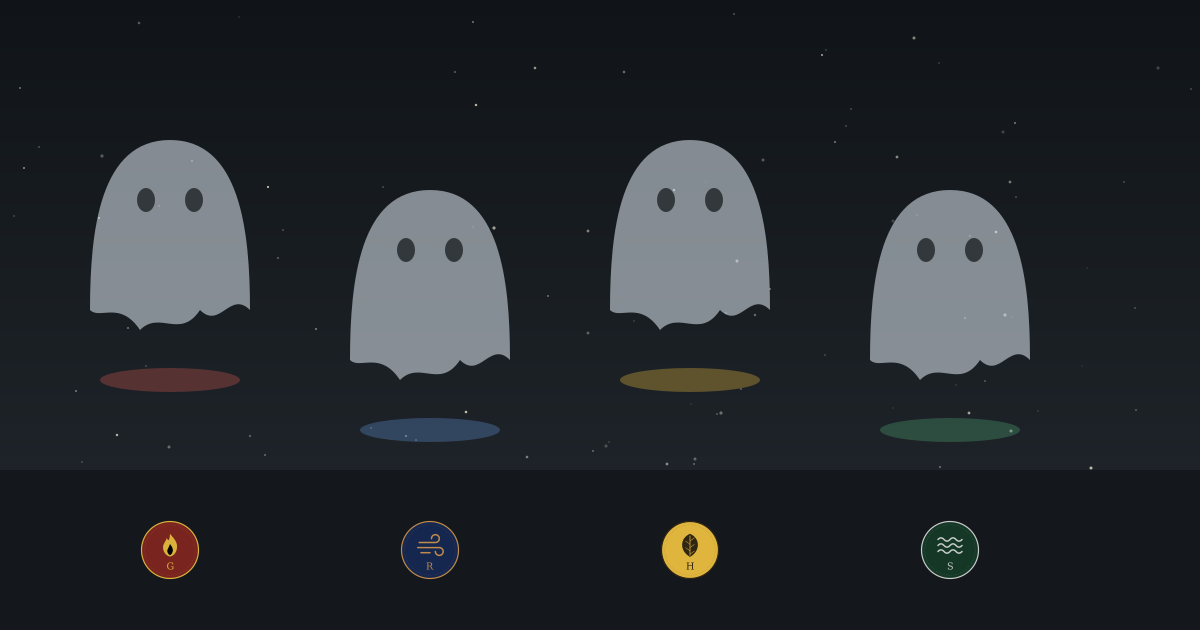
Hogwarts is home to around twenty ghosts, but four of them have a special role. Each house has its own ghost who sits with students at feasts, keeps an eye on the common room and occasionally offers advice.
Their stories are among the darkest in the series, and they say a surprising amount about the houses they haunt. Here’s who each ghost was in life, how they died and what they reveal about their house.
The four house ghosts at a glance
| House | Ghost | Real name | How they died | Personality |
|---|---|---|---|---|
| Gryffindor | Nearly Headless Nick | Sir Nicholas de Mimsy-Porpington | Botched execution, 1492 | Friendly, proud, a little vain |
| Ravenclaw | The Grey Lady | Helena Ravenclaw | Killed by the Baron | Aloof, reserved, haunted by guilt |
| Hufflepuff | The Fat Friar | Not given | Executed by church officials | Cheerful and forgiving |
| Slytherin | The Bloody Baron | Not given | Took his own life after killing Helena | Silent, gaunt and intimidating |
Gryffindor: Nearly Headless Nick
Who he was
Sir Nicholas de Mimsy-Porpington was a courtier who was executed on 31 October 1492. According to Nick, a spell he cast to straighten a lady-in-waiting’s teeth went wrong and gave her a tusk instead. He was sentenced to death.
How he died
His execution was botched. The axe was blunt, and it took 45 strikes. Even then, his head wasn’t fully removed. It still hangs by a thin strip of skin, which Nick sometimes demonstrates by tipping his head sideways like a lid.
His story in the books
- The Headless Hunt. Nick is desperate to join the Headless Hunt, a club for ghosts whose heads came off completely. They keep rejecting him on a technicality.
- His Deathday Party. In Chamber of Secrets, Harry, Ron and Hermione attend the 500th anniversary of his death. The food is rotten, the music is like nails on a blackboard, and the Headless Hunt arrives to show off.
- Petrified. Later that year, Nick is Petrified by the basilisk. Because he was already dead, he took the full force of its gaze through Justin Finch-Fletchley and survived.
- Explaining ghosts. In Order of the Phoenix, after Sirius dies, Nick explains to Harry that ghosts are people who were afraid of death and chose to stay behind.
What he says about Gryffindor
Nick is friendly, loyal to his house and quick to defend Gryffindor’s honour. He’s also a little vain and touchy about his image. That’s Gryffindor in miniature: brave and warm, but proud.
Ravenclaw: The Grey Lady
Who she was
The Grey Lady is Helena Ravenclaw, daughter of Rowena Ravenclaw, one of the four founders of Hogwarts. She was clever, but she resented living in her brilliant mother’s shadow.
How she died
Helena stole her mother’s diadem, which was said to make its wearer wiser, and fled to a forest in Albania. When Rowena fell ill, she sent a man who loved Helena to bring her home. That man was the Baron. When Helena refused to return, he stabbed her in a rage. He then took his own life.
Her story in the books
- She rarely speaks. The Grey Lady is aloof and avoids most students.
- Tom Riddle. Decades before Harry’s time, a charming and attentive Tom Riddle persuaded her to reveal where she’d hidden the diadem. He found it, made it a Horcrux and hid it inside Hogwarts.
- Harry. In Deathly Hallows, Harry finds her and convinces her to tell him what she told Riddle. That conversation leads him to the diadem in the Room of Requirement.
What she says about Ravenclaw
The Grey Lady shows the house’s shadow side: a craving to be the cleverest, and pride that turns into isolation. Her story is a warning that intelligence without wisdom does real damage.
Hufflepuff: The Fat Friar
Who he was
The Fat Friar was a monk who lived in the Middle Ages. He was known for his warmth and good humour, and for curing sick villagers.
How he died
Senior church officials grew suspicious of his healing ability, which he performed by poking patients with a stick, and of his habit of pulling rabbits out of the communion cup. He was executed.
His story in the books
- The first ghost Harry meets. At Harry’s first sorting, the Fat Friar is the ghost who suggests forgiving Peeves and giving him another chance.
- Endless good cheer. He’s the friendliest of the four ghosts and is often seen chatting to students.
What he says about Hufflepuff
The Fat Friar embodies Hufflepuff kindness and forgiveness, sometimes to a fault. He wants to give Peeves a second chance, which most people at Hogwarts would consider a bad idea. That’s the house all over: generous, fair and occasionally too trusting.
Slytherin: The Bloody Baron
Who he was
The Bloody Baron was a nobleman in love with Helena Ravenclaw, sent by her mother to bring her home.
How he died
He killed Helena when she refused to return with him, and then, overcome with remorse, took his own life. His robes are covered in silver bloodstains.
His story in the books
- Feared by Peeves. He’s the only one who can control Peeves the poltergeist.
- Silent and grim. He rarely speaks, and most students keep their distance.
- Penance. He wears chains as a sign of guilt for what he did.
What he says about Slytherin
The Baron shows Slytherin’s power and its danger. He is commanding and feared, but his story is one of passion becoming possession and ending in violence. His penance also suggests something important: even in Slytherin, remorse is possible.
The link between the Grey Lady and the Bloody Baron
The Ravenclaw and Slytherin ghosts are tied together by a single act of violence. Helena stole the diadem. The Baron killed her trying to bring her back. Both stayed on as ghosts. A thousand years later, the diadem became a Horcrux, and Helena’s secret helped Harry find it.
It’s one of the few places where the founders’ world and the main story connect directly.
Ghosts compared
| Nearly Headless Nick | The Grey Lady | The Fat Friar | The Bloody Baron | |
|---|---|---|---|---|
| Talks to students | Often | Rarely | Often | Almost never |
| Mood | Sociable | Aloof | Cheerful | Grim |
| Key moment | Petrified in Chamber of Secrets | Reveals the diadem in Deathly Hallows | Forgives Peeves in Philosopher’s Stone | Controls Peeves throughout |
| House trait shown | Pride and courage | Intellect and pride | Kindness and forgiveness | Power and remorse |
How ghosts work in the wizarding world
The books give a fairly clear picture of what a ghost is:
- Only witches and wizards can become ghosts. Muggles can’t.
- A ghost is a choice. In Order of the Phoenix, Nearly Headless Nick tells Harry that ghosts are people who were afraid of death and chose to stay behind as an imprint of themselves.
- They can’t move on. Having stayed, they can’t go on to whatever lies beyond. Nick admits he doesn’t know what that is.
- They can’t come back fully. This is why Nick can’t help Harry after Sirius dies: Sirius chose to go on.
- They’re silvery and see-through. Walking through one feels like stepping into icy water.
- They don’t eat. At Nick’s Deathday Party, the food is rotten so the ghosts can almost taste it.
That last point makes the house ghosts more poignant. They sit at feasts every year, watching students eat food they can’t taste.
The best ghost moments in the books
- Nick’s Deathday Party (Chamber of Secrets). Rotting food, a ghostly orchestra and the Headless Hunt crashing the event.
- Nick explains death (Order of the Phoenix). A quiet, sad conversation with Harry after Sirius dies.
- The Grey Lady’s confession (Deathly Hallows). Helena tells Harry how Tom Riddle tricked her into revealing the diadem.
- The ghosts at Harry’s first feast (Philosopher’s Stone). The Fat Friar and Nick argue about Peeves while the first-years stare.
- Nick petrified (Chamber of Secrets). Even a ghost isn’t safe from the basilisk.
Other ghosts at Hogwarts
The house ghosts aren’t the only spirits in the castle. A few others appear in the books:
- Moaning Myrtle, a Ravenclaw student killed by the basilisk in 1943, who haunts a girls’ bathroom.
- Professor Binns, who teaches History of Magic. He fell asleep in the staff room and got up to teach the next morning, leaving his body behind.
- Peeves, a poltergeist rather than a ghost, who causes chaos throughout the castle.
Which ghost would watch over you?
Your house decides which ghost sits at your table. Take our house quiz to find out whether you’d be chatting with Nick, ignored by the Grey Lady, cheered on by the Fat Friar or avoiding the Bloody Baron.
For more on the houses’ symbols, see house colours, animals and elements.
Frequently asked questions
Who is the Gryffindor ghost?
Nearly Headless Nick, whose full name is Sir Nicholas de Mimsy-Porpington. His head was almost, but not quite, cut off in 1492.
Who is the Ravenclaw ghost?
The Grey Lady, who in life was Helena Ravenclaw, daughter of Rowena Ravenclaw.
Why is the Bloody Baron covered in blood?
The silver bloodstains are Helena Ravenclaw's. He killed her when she refused to return home with him, then took his own life in remorse. He wears chains as a sign of penance.
Why can't Nearly Headless Nick join the Headless Hunt?
Because his head isn't fully detached. The Headless Hunt only admits ghosts whose heads came off completely, and Nick's is still attached by a thin strip of skin.
Can ghosts at Hogwarts move on?
Ghosts in the books are people who feared death and chose to stay behind as imprints of themselves. Nick explains in Order of the Phoenix that they can't go on to whatever lies beyond.
Is Peeves a house ghost?
No. Peeves is a poltergeist, not a ghost, and doesn't belong to any house. The Bloody Baron is the only one who can control him.