Gryffindor vs Slytherin: The Rivalry, the Differences and Which You Are
Why Gryffindor and Slytherin have been rivals since Hogwarts was founded, how the two houses really differ, what they have in common, and a quick test to tell which one fits you.
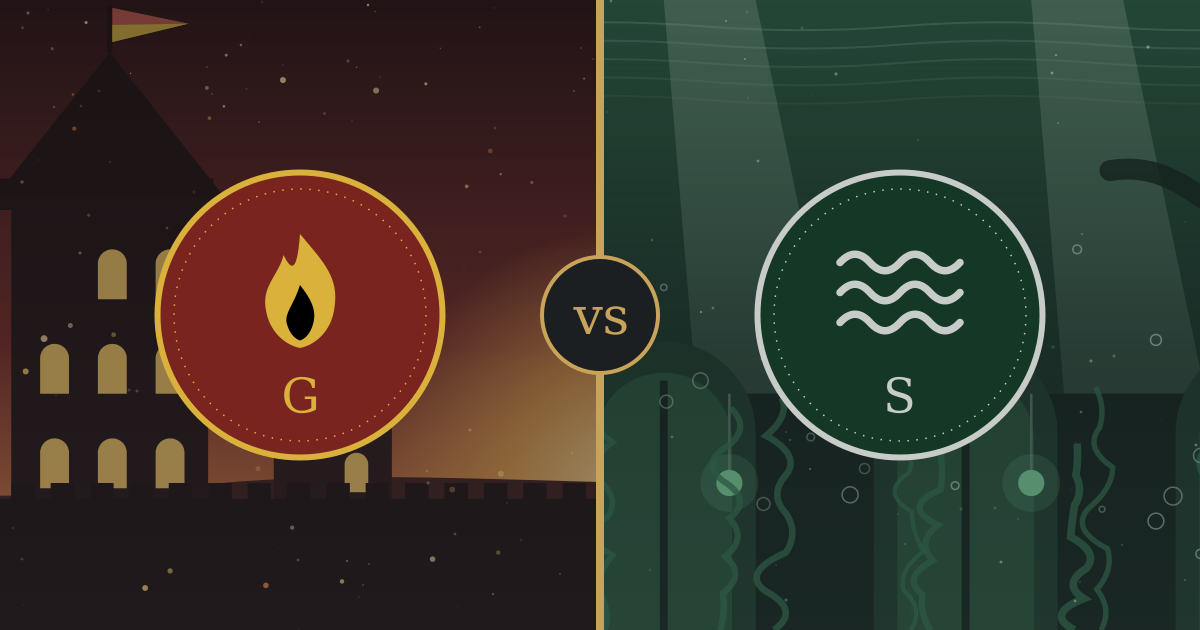
No rivalry at Hogwarts runs deeper than Gryffindor versus Slytherin. It shapes the Quidditch season, the House Cup and, by the end of the series, the war itself.
But the two houses are more alike than either would admit. Both are bold, confident and driven. What separates them is why they act. This guide covers where the rivalry came from, how the two houses really differ, and how to tell which one you’d be sorted into.
Where the rivalry started
Hogwarts was founded more than a thousand years ago by four witches and wizards. Godric Gryffindor and Salazar Slytherin were said to be close friends at first.
They fell out over admissions. Slytherin wanted the school to accept only students from all-magic, or “pure-blood”, families. Gryffindor and the other two founders disagreed. After a bitter argument, Slytherin left the school. According to legend, he left behind a hidden chamber that only his true heir could open: the Chamber of Secrets.
That split never healed. Slytherin’s house kept a reputation for valuing blood status, and Gryffindor’s kept a reputation for opposing it. By Harry’s time, the old disagreement had become a full-blown rivalry.
The core difference
| Gryffindor | Slytherin | |
|---|---|---|
| Core value | Courage | Ambition |
| Acts on | Principle | Purpose |
| Asks first | “What’s right?” | “What do I want?” |
| Risk | Risks themselves for others | Weighs risk against reward |
| Leadership style | Leads from the front | Leads through strategy and influence |
| Loyalty | To friends and causes | To their own circle |
| Typical flaw | Recklessness | Ruthlessness |
| Colours | Scarlet and gold | Green and silver |
| Animal | Lion | Serpent |
| Element | Fire | Water |
| Common room | Gryffindor Tower, behind the Fat Lady | Dungeons, under the Black Lake |
| House ghost | Nearly Headless Nick | The Bloody Baron |
The short version: Gryffindor acts on principle. Slytherin acts on purpose.
What the two houses have in common
It’s easy to overlook how similar these houses are. Both:
- Want to lead. Neither house is comfortable in the background.
- Are confident. Sometimes to the point of arrogance.
- Are fiercely loyal to their own. Gryffindors to their friends, Slytherins to their circle.
- Act boldly. Gryffindors charge in; Slytherins make bold moves too, just calculated ones.
That shared boldness is why they clash so often. Two groups of natural leaders with opposite reasons for leading will always compete.
The Sorting Hat’s view
The clearest sign that these houses overlap is Harry Potter’s own sorting. In Philosopher’s Stone, the Hat tells Harry he has a thirst to prove himself and that Slytherin could help him on the way to greatness. Harry, who had already heard that every dark wizard came from Slytherin, asks not to go there. The Hat sends him to Gryffindor.
In Chamber of Secrets, Harry worries he belongs in Slytherin after all. Dumbledore tells him that the fact he chose not to go there shows he isn’t like Slytherin’s darker members. It’s the choices we make that show who we are.
Characters who cross the line
The books deliberately complicate the “good Gryffindor, bad Slytherin” picture.
Severus Snape: the brave Slytherin
Snape was a Slytherin and a former Death Eater. He was also a double agent who spent nearly two decades protecting Harry, at enormous risk, out of love for Harry’s mother. In the epilogue, Harry calls him probably the bravest man he ever knew.
Peter Pettigrew: the treacherous Gryffindor
Pettigrew was a Gryffindor and one of James Potter’s closest friends. He betrayed the Potters to Voldemort, faked his own death and framed Sirius Black. His sorting was so contested that he was a hatstall between Gryffindor and Slytherin.
Regulus Black: the Slytherin who turned
Sirius Black’s younger brother Regulus was a Slytherin who joined the Death Eaters as a teenager. When he discovered Voldemort’s Horcruxes, he turned against him and died stealing one so that it could be destroyed.
Draco Malfoy: the reluctant Slytherin
Draco spends six books as Harry’s rival. When he’s finally ordered to kill Dumbledore, he can’t do it. His story is about the gap between ambition and the willingness to do real harm.
How each house plays the rivalry
On the Quidditch pitch
Gryffindor–Slytherin matches are the most heated of the season. When Harry joined the team, Gryffindor hadn’t won the Quidditch Cup since Charlie Weasley left. In Chamber of Secrets, Lucius Malfoy bought the entire Slytherin team new Nimbus 2001 brooms to help them win, which is about as Slytherin as a strategy gets.
In the House Cup
In Harry’s first year, Slytherin was about to win the House Cup for the seventh year in a row. On the final night, Dumbledore awarded last-minute points to Harry, Ron, Hermione and Neville, and Gryffindor won by ten points. You can read more in how the House Cup works.
In the war
By the Battle of Hogwarts, the rivalry had real stakes. Most Slytherin students left before the fighting started, while Gryffindors stayed in large numbers. But some Slytherins fought on Hogwarts’ side, and Head of Slytherin Horace Slughorn returned with reinforcements.
Famous members compared
| Role | Gryffindor | Slytherin |
|---|---|---|
| Founder | Godric Gryffindor | Salazar Slytherin |
| Head of House (Harry’s era) | Minerva McGonagall | Severus Snape, later Horace Slughorn |
| Most famous student | Harry Potter | Tom Riddle (Voldemort) |
| Quidditch Seeker (Harry’s era) | Harry Potter | Draco Malfoy |
| Headmaster | Albus Dumbledore | Phineas Nigellus Black, Severus Snape |
| Unexpected hero or villain | Peter Pettigrew (traitor) | Severus Snape (hero) |
| Family dynasty | The Weasleys | The Malfoys and the Blacks |
Common misconceptions
“Gryffindors are always the good guys”
The series’ heroes are mostly Gryffindors, but the house is no guarantee of goodness. Pettigrew is the clearest example, and even James and Sirius behave badly as teenagers.
“Every Slytherin is a Death Eater”
Many Death Eaters were Slytherins, but not all Slytherins became Death Eaters, and not all Death Eaters were Slytherins (Pettigrew again). Slughorn fought for Hogwarts, and Andromeda Tonks, from the Slytherin Black family, married a Muggle-born.
“Slytherins are cowards”
Slytherins are cautious and value self-preservation, which can look like cowardice next to Gryffindor recklessness. But Snape’s double life and Regulus Black’s defiance of Voldemort took extraordinary courage. Slytherin bravery tends to be quiet and calculated.
“Gryffindors are stupid”
The stereotype of the brave but dim Gryffindor ignores Hermione, McGonagall and Dumbledore, three of the most brilliant characters in the books. Courage and intelligence aren’t opposites.
Strengths and weaknesses
Gryffindor
At its best: brave, principled, protective of the vulnerable and willing to act when others freeze.
At its worst: reckless, self-righteous and quick to judge. As teenagers, James Potter and Sirius Black bullied Snape, and their friends laughed along.
Slytherin
At its best: strategic, resourceful, ambitious and protective of its own.
At its worst: ruthless, status-obsessed and historically linked to blood prejudice.
Which are you? A quick test
Pick the answer closest to your instinct.
| Situation | Gryffindor | Slytherin |
|---|---|---|
| Someone is being bullied | Step in now | Find a way to stop it that won’t backfire on you |
| You’re offered a shortcut to success | Refuse if it’s unfair | Take it if it’s within the rules |
| A dangerous mission | Volunteer | Ask what you’d get out of it, then decide |
| You lose an argument | Keep fighting for the principle | Regroup and come back with a better strategy |
| A rule seems unfair | Break it openly | Bend it quietly |
| What do people admire in you? | Courage | Drive |
Mostly left column: read the Gryffindor guide. Mostly right: the Slytherin guide. If it’s split, you’re in good company with Harry.
The rivalry in the end
The series ends with a quiet resolution. In the epilogue, Harry’s son Albus Severus is nervous about being sorted into Slytherin. Harry tells him he’s named after two headmasters, one of them a Slytherin, and that if he’s sorted there, the house will be lucky to have him. Harry also tells him the Hat takes your choice into account.
Nineteen years after the war, the hero of Gryffindor tells his son Slytherin would be fine. That’s the books’ last word on the rivalry.
Want to know which side you’d be on? Take our house quiz and see your score for both.
Frequently asked questions
Why do Gryffindor and Slytherin hate each other?
The rivalry goes back to the founding of Hogwarts. Salazar Slytherin wanted only pure-blood students; Godric Gryffindor disagreed. Slytherin left the school after their argument. A thousand years of Quidditch, House Cup competition and, more recently, a war have kept the rivalry alive.
Are Gryffindor and Slytherin similar?
Yes, more than either house admits. Both are bold, driven and confident. The difference is what drives them: Gryffindors are driven by principle and courage, Slytherins by ambition and self-interest.
Was Harry almost in Slytherin?
Yes. In Philosopher's Stone, the Sorting Hat tells Harry he'd do well in Slytherin. Harry asks not to go there, and the Hat puts him in Gryffindor.
Can a Gryffindor be evil or a Slytherin be good?
Yes. Peter Pettigrew was a Gryffindor who betrayed the Potters. Severus Snape was a Slytherin who spent years risking his life to defeat Voldemort.
Which house wins more Quidditch matches?
The books don't give a full record. When Harry joined the team, Gryffindor hadn't won the Quidditch Cup since Charlie Weasley left, and Gryffindor beat Slytherin in several key matches during Harry's time.