Hogwarts House Traits Explained: What Each House Really Values
A complete guide to the traits of Gryffindor, Ravenclaw, Hufflepuff and Slytherin: core values, strengths, weaknesses, how each house behaves in real situations, and how to tell which traits you have.
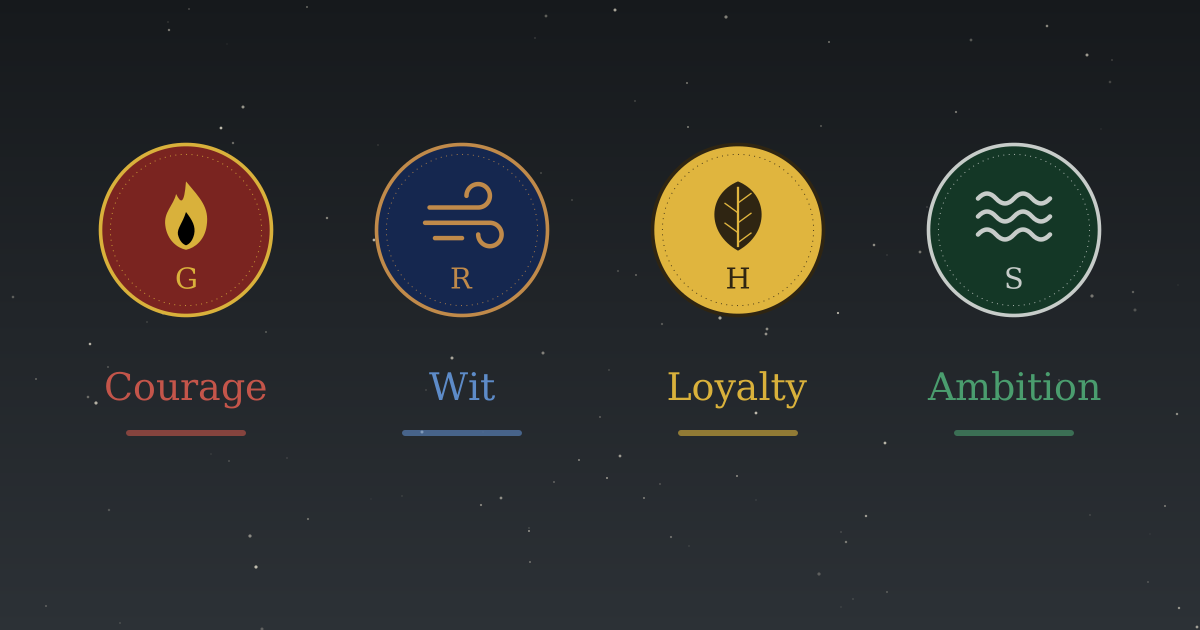
Every Hogwarts house is built around a handful of core traits. Understanding them properly is the best way to work out where you’d fit, because the Sorting Hat doesn’t sort on what you’re good at. It sorts on what you value most.
This guide covers each house’s traits in depth: what they are, how they show up in real behaviour, where they go wrong, and which characters show them best.
Quick summary
| House | Core value | Key traits | Shadow side |
|---|---|---|---|
| Gryffindor | Courage | Bravery, daring, nerve, chivalry | Recklessness, self-righteousness |
| Ravenclaw | Intelligence | Curiosity, wit, creativity, wisdom | Aloofness, intellectual pride |
| Hufflepuff | Loyalty | Patience, fairness, hard work, kindness | Over-trusting, conflict-averse |
| Slytherin | Ambition | Cunning, resourcefulness, leadership | Ruthlessness, status obsession |
How the Sorting Hat reads traits
Before going house by house, it’s worth noting what the books say about how the Hat actually works. Two cases make it clear:
- Neville Longbottom showed very little visible bravery at eleven. But he valued courage, and the Hat put him in Gryffindor over his own request for Hufflepuff.
- Hermione Granger was clearly brilliant enough for Ravenclaw. But she valued doing what’s right over learning for its own sake, so she went to Gryffindor.
So when you read the traits below, ask yourself which ones you value, not just which ones you have. For more on this, see how the Sorting Hat decides.
Gryffindor traits
Core traits
- Bravery: facing danger, fear or difficulty head-on.
- Daring: willingness to take bold risks.
- Nerve: keeping your head under pressure.
- Chivalry: protecting others, especially the vulnerable.
How it shows up
Gryffindors are the first to volunteer, the first to object when something’s unfair and the first to step between a bully and their target. Their courage is often moral as much as physical: telling the truth when it’s costly, or standing beside someone nobody else will.
Shadow side
Gryffindors can be reckless, acting before thinking. They can also be self-righteous, certain they’re on the right side and slow to see the other view. As teenagers, James Potter and Sirius Black bullied Snape, and Harry was ashamed when he saw it.
Best examples
Harry Potter, Neville Longbottom, Minerva McGonagall.
Full guide: Gryffindor.
Ravenclaw traits
Core traits
- Intelligence: a quick, capable mind.
- Wit: humour and cleverness with words and ideas.
- Creativity: original thinking and imagination.
- Wisdom: knowing how to use what you know.
How it shows up
Ravenclaws are drawn to ideas. They ask why, look for patterns and enjoy puzzles for their own sake. Many are comfortable being alone, and the best are open to people and ideas others dismiss.
Shadow side
Intelligence can turn into arrogance, and independence into aloofness. Ravenclaws can also be cliquey. In Order of the Phoenix, Luna’s housemates repeatedly hide her belongings. And intelligence without honesty gives you Gilderoy Lockhart.
Best examples
Luna Lovegood, Filius Flitwick, Garrick Ollivander.
Full guide: Ravenclaw.
Hufflepuff traits
Core traits
- Loyalty: standing by people when it’s hard.
- Patience: steady effort over time.
- Fairness: wanting everyone treated equally.
- Hard work: finishing what you start.
How it shows up
Hufflepuffs are the people others rely on. They show up, do the work and notice who’s being left out. They’re often honest to the point of bluntness, and rarely interested in recognition.
Shadow side
Hufflepuffs can be too trusting, assuming others share their sense of fairness. They can also avoid conflict and undersell themselves, which feeds the house’s unfair reputation. See why Hufflepuff is underrated.
Best examples
Cedric Diggory, Nymphadora Tonks, Newt Scamander.
Full guide: Hufflepuff.
Slytherin traits
Core traits
- Ambition: a strong drive to achieve.
- Cunning: clever, strategic thinking.
- Resourcefulness: making the most of what you have.
- Leadership: influencing and directing others.
How it shows up
Slytherins plan ahead, read people well and know what they want. They tend to build strong networks and are fiercely protective of their own circle. Many are natural leaders.
Shadow side
Ambition without limits becomes ruthlessness. Slytherin also has a long history of blood-purity prejudice, going back to its founder. Many of Voldemort’s followers were Slytherins.
Best examples
Severus Snape, Horace Slughorn, Narcissa Malfoy.
Full guide: Slytherin.
The same situation, four ways
One of the best ways to understand house traits is to watch each house handle the same problem.
| Situation | Gryffindor | Ravenclaw | Hufflepuff | Slytherin |
|---|---|---|---|---|
| A friend is being bullied | Steps in immediately | Works out why it’s happening | Stays with the friend afterwards | Finds leverage over the bully |
| A hard exam | Wings it with confidence | Studies the subject deeply | Revises steadily for weeks | Studies what’s likely to come up |
| A locked door | Opens it | Studies the lock | Fetches a friend first | Finds out who has the key |
| An unfair rule | Breaks it openly | Argues it doesn’t make sense | Follows it but objects | Works around it quietly |
| A group project | Pitches the bold idea | Does the research | Makes sure it gets finished | Runs the show |
Most people will recognise themselves in more than one column. That’s normal.
Primary and secondary houses
Almost nobody is purely one house. Many fans think in terms of a primary house (your strongest value) and a secondary house (the one that shapes how you pursue it).
Some common combinations:
| Combination | What it looks like |
|---|---|
| Gryffindor + Ravenclaw | Brave and brilliant. Fights with ideas and evidence. (Hermione) |
| Gryffindor + Hufflepuff | Brave out of loyalty. Shows up for friends no matter what. (Neville) |
| Gryffindor + Slytherin | Bold and ambitious. Wants to lead the charge. (Harry, per the Hat) |
| Ravenclaw + Slytherin | Clever and strategic. Uses knowledge to get ahead. |
| Ravenclaw + Hufflepuff | Curious and kind. A patient teacher or researcher. |
| Hufflepuff + Slytherin | Loyal and resourceful. Fiercely protective of their people. |
If your top two houses are very close, you might be near what the books call a hatstall.
House traits in everyday life
House traits are easy to spot outside Hogwarts too. Here’s how they tend to show up at work, at school and with friends:
| Setting | Gryffindor | Ravenclaw | Hufflepuff | Slytherin |
|---|---|---|---|---|
| At work | Volunteers for the hard project | Becomes the go-to expert | Keeps the team running | Angles for the promotion |
| In a meeting | Says what everyone’s thinking | Asks the question nobody asked | Makes sure quiet people are heard | Steers towards their preferred outcome |
| With friends | The one who plans adventures | The one with odd facts | The one who remembers birthdays | The one with connections |
| Under stress | Takes action, maybe too fast | Overthinks | Takes on too much | Takes control |
| Biggest fear | Being a coward | Being ordinary | Letting people down | Failing |
Traits of famous characters
| Character | House | Defining trait | Secondary trait |
|---|---|---|---|
| Harry Potter | Gryffindor | Courage | Ambition (the Hat saw Slytherin) |
| Hermione Granger | Gryffindor | Moral courage | Intelligence |
| Neville Longbottom | Gryffindor | Courage that grew | Loyalty |
| Luna Lovegood | Ravenclaw | Originality | Kindness |
| Cedric Diggory | Hufflepuff | Fairness | Courage |
| Severus Snape | Slytherin | Cunning | Courage and loyalty |
| Draco Malfoy | Slytherin | Ambition | Self-preservation |
How to identify your own traits
Ask yourself these questions, and answer honestly rather than aspirationally:
- When you’re proudest of yourself, what did you do? Something brave, something clever, something kind or something ambitious?
- What would hurt most to be called? Cowardly, stupid, selfish or weak?
- What do you admire most in other people? Nerve, imagination, kindness or drive?
- When things go wrong, what’s your instinct? Act, analyse, support or strategise?
The answers that come up most point to your strongest value. Several of these are built into our house quiz, which also shows your full score for every house.
Traits vs stereotypes
House traits are often flattened into stereotypes: brave, nerdy, nice, evil. The books are more generous than that:
- Not every Gryffindor is a hero. Peter Pettigrew betrayed his friends.
- Not every Ravenclaw is studious. Luna is creative and eccentric, not bookish.
- Not every Hufflepuff is meek. Tonks was an Auror who died fighting.
- Not every Slytherin is evil. Snape spent years protecting Harry.
Use the traits as a guide to what someone values, not a verdict on whether they’re good. For a head-to-head comparison, see what is the best Hogwarts house, or compare all four on our houses page.
Frequently asked questions
What are the four Hogwarts house traits?
Gryffindor values courage, Ravenclaw values intelligence, Hufflepuff values loyalty and fairness, and Slytherin values ambition and cunning.
What are the negative traits of each house?
Gryffindors can be reckless and self-righteous. Ravenclaws can be aloof and arrogant. Hufflepuffs can be too trusting and avoid conflict. Slytherins can be ruthless and status-obsessed.
Which house is the most loyal?
Hufflepuff is the house most associated with loyalty, but all four houses are loyal in their own way. Gryffindors are loyal to causes and friends, and Slytherins are loyal to their own circle.
Can you have traits from more than one house?
Yes, almost everyone does. The Sorting Hat picks the house that matches your strongest value, but your other traits still shape who you are.
Does the Sorting Hat look at traits or values?
The books suggest values. Neville didn't seem brave at eleven but valued courage, and the Hat put him in Gryffindor. Hermione had Ravenclaw-level intelligence but valued doing what's right more, so she went to Gryffindor too.